
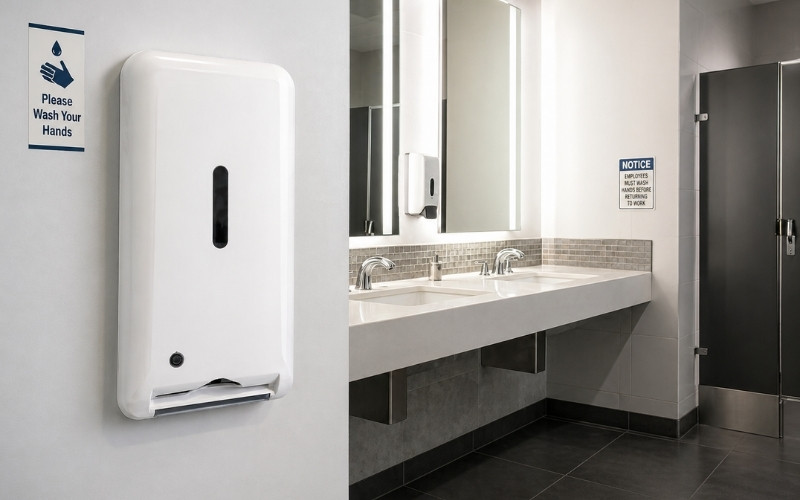
Touchless Soap Dispensers: Do They Really Improve Hygiene in Commercial Spaces?
If you have searched for a “soap dispenser hand machine,” you are likely looking for a cleaner, more efficient way to manage hygiene in your facility. What most businesses are actually referring to is a touchless soap dispenser system, but the bigger question is whether these systems truly improve hygiene compared to traditional manual dispensers.
The answer is yes, but with important context.
From offices and schools to healthcare facilities and restaurants, dispensing systems play a direct role in how effectively hand hygiene is maintained. The difference between manual and automatic systems is not just convenience. It affects consistency, contamination control, and long-term efficiency.
Manual vs. Automatic Soap Dispensers: What Is the Difference?
Both manual and automatic dispensers have a place in commercial settings, but they perform differently in real-world conditions.
Manual Soap Dispensers
Manual dispensers are still widely used because they are:
- Lower upfront cost
- Simple to install and maintain
- Durable in lower-traffic environments
However, they also come with tradeoffs:
- Require physical contact with shared surfaces
- Inconsistent dispensing, leading to overuse or underuse
- Higher potential for cross-contamination
Touchless Soap Dispensers
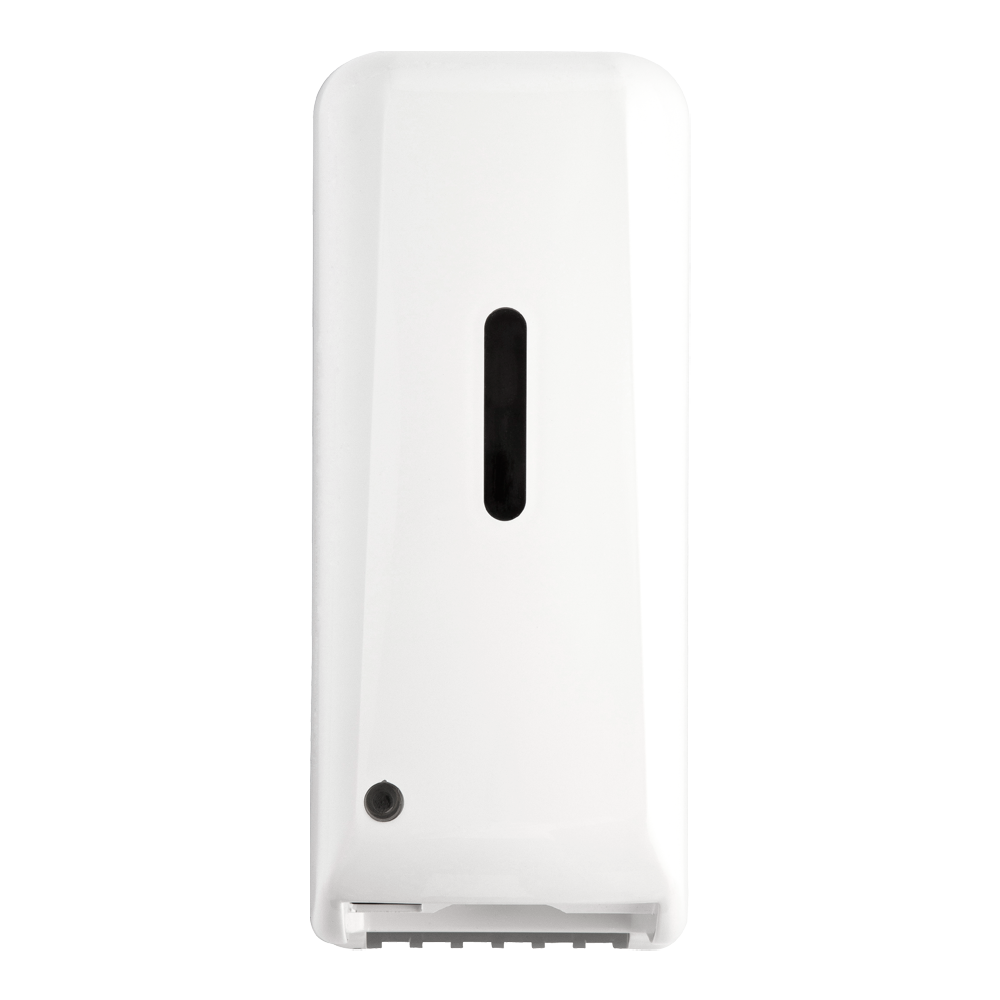
Systems like our Automatic Touch Free Soap Dispenser are designed for commercial environments where consistency and hygiene matter.
Automatic dispensers are designed to remove those variables by:
- Eliminating contact surfaces
- Delivering consistent portions of soap
- Reducing waste and mess
For example, systems like our Automatic Touch Free Soap Dispenser are designed for commercial environments where consistency and hygiene matter.
In high-traffic environments, these differences become more noticeable over time.
The Science Behind Touchless Hygiene
Hand hygiene research consistently shows that reducing shared contact surfaces lowers the risk of cross-contamination. A study published in the American Journal of Infection Control found that high-touch restroom surfaces can act as reservoirs for bacteria and pathogens, especially when used by many people throughout the day. Another important factor is consistency. Studies show that when soap dispensing is easier and more reliable, users are more likely to complete proper handwashing.
Touchless systems support this by:
- Removing friction from the process
- Delivering a consistent amount of soap each time
- Encouraging repeatable behavior
In environments like healthcare, food service, and schools, these improvements can have a meaningful impact.
Why Soap Systems Matter Just as Much as Dispensers
One of the most overlooked factors in restroom hygiene is the type of soap system being used.
At Kentucky Cleaning Solutions, many facilities use sealed cartridge systems like our 1000 mL foaming hand soap cartridges, which provide several advantages:
- Controlled dispensing reduces waste
- Foaming soap uses less product per wash while maintaining coverage
- Sealed cartridges help prevent contamination inside the dispenser
- Faster refills reduce maintenance time
When paired with a touchless dispenser, this creates a more contained and consistent hygiene system.
Hygiene Does Not Stop at Soap
Even the best soap dispenser cannot fully solve hygiene issues if the rest of the restroom relies on shared contact points.
After washing their hands, users often come into contact with:
- Paper towel levers
- Exposed towel stacks
- Overfilled trash receptacles
This is why system design matters.
The Role of Paper Towel Dispensers
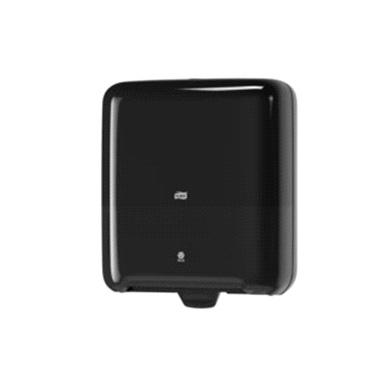
Pairing your soap system with an automatic commercial paper towel dispenser creates a more complete hygiene solution and improves the overall user experience.
Drying hands is just as important as washing them. Wet hands are more likely to transfer bacteria than dry hands.
Paper towel dispensers help improve hygiene by:
- Reducing contact points
- Controlling usage and waste
- Keeping towels clean and protected
Pairing your soap system with an automatic commercial paper towel dispenser creates a more complete hygiene solution and improves the overall user experience.
Building a Complete Restroom System
The most effective commercial restrooms are designed as systems, not individual products.
A well-designed setup typically includes:
- Soap dispensers, manual or touchless
- Foaming soap cartridge systems
- Paper towel dispensers
- Hand sanitizer stations
- Waste receptacles
When these components work together, they help reduce contamination, improve user experience, and control long-term costs.
Upgrade Your Restroom with Kentucky Cleaning Solutions
At Kentucky Cleaning Solutions, we help businesses build restroom systems that work.
From touchless soap dispensers to foaming hand soap cartridges and paper towel systems, we provide the products you need to improve hygiene and efficiency across your facility.
FAQ: Soap Dispensers for Commercial Use
Are touchless soap dispensers more hygienic than manual ones?
Yes. Touchless dispensers reduce shared contact surfaces, which lowers the risk of cross-contamination in high-traffic environments.
Do automatic soap dispensers save money?
In many cases, yes. They dispense controlled amounts of soap, which reduces waste and lowers refill frequency over time.
What type of soap works best with commercial dispensers?
Foaming soap in sealed cartridge systems, like 1000 mL refills, is typically the most efficient and hygienic option for commercial use.
Should I upgrade paper towel dispensers at the same time?
Yes. Hygiene improvements are most effective when soap dispensing and hand drying systems are upgraded together.