
Preventing Disease Spread in Equine & Large Animal Barns
Maintaining a healthy barn environment goes far beyond daily mucking. In equine and large animal facilities, disease-causing organisms such as Streptococcus equi (strangles), Salmonella, MRSA, viruses, and parasites can survive in stalls, soil, wood, and on equipment for extended periods.
These pathogens don’t just live in animals – they persist in:
- Manure and organic debris embedded in wood and concrete
- Bedding and dirt floors
- Porous stall walls
- Rubber mats
- Tools and shared equipment
- Boots, clothing, and even hands
Effective disease prevention requires a two-step approach: thorough cleaning followed by proper disinfection. Skipping the cleaning step is one of the most common (and costly) mistakes.
Step One: Cleaning Comes First
Disinfectants cannot penetrate organic material. Research published in Applied and Environmental Microbiology shows that manure, bedding, and embedded soil significantly reduce disinfectant effectiveness. In simple terms – if it’s not clean, it can’t be disinfected.
Organic Soil Removal Protocol
Before applying any disinfectant:
- Remove animals, feed, water buckets, and bedding
- Remove and discard soiled bedding and manure
- Pull up rubber mats
- Rinse heavy soil toward drains
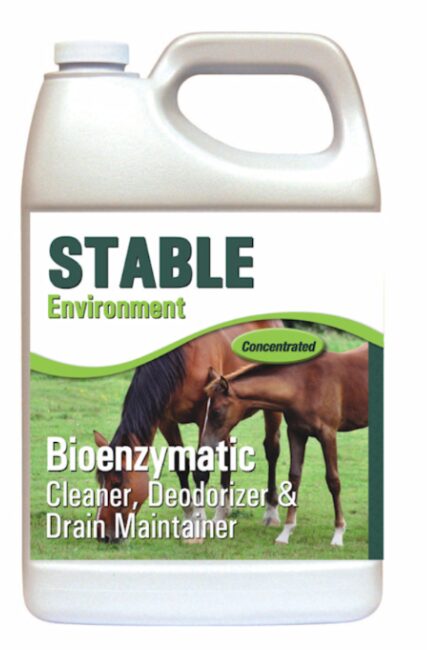
- Apply an enzymatic cleaner
- Scrub thoroughly
- Allow 3–5 minutes of dwell time
- Rinse completely
- Remove standing water and allow to dry
For breaking down organic material, ProVetLogic Enzymatic Cleaner is specifically designed to digest manure and organic debris, making it far more effective than standard detergents.
For application, a hose-end sprayer or foam applicator allows for even coverage from ceiling to floor.
Step Two: Proper Disinfection
Once surfaces are visibly clean and dry, disinfection can begin.
Using a veterinary-grade disinfectant such as ProVetLogic Disinfectant Concentrate, mix according to label directions (commonly 1 ounce per gallon of water). Apply to:
- Stall walls and doors
- Buckets and feeders
- Cross ties
- Gates
- Tools
- Rubber mats
- Human and animal touchpoints
Allow surfaces to air dry completely. Do not rinse unless specified by the label — contact time is critical for killing pathogens effectively.
Don’t Overlook Boot & Tool Hygiene
Handlers can unknowingly transfer bacteria and viruses between barns. If dedicated boots and tools aren’t possible, implement this quick protocol:
- Scrape off heavy debris
- Apply enzymatic cleaning solution (2–4 oz per gallon)
- Scrub and allow 3–5 minute dwell time
- Rinse thoroughly
- Air dry
Synthetic, one-piece brushes and tools are strongly recommended over wood-handled or natural bristle options, as porous materials can harbor pathogens. Kentucky Cleaning Solutions carries durable, non-porous cleaning tools designed for agricultural environments.
Hand Hygiene Matters More Than You Think
Hand washing remains one of the simplest and most effective biosecurity measures.
Wash hands:
- At the start of duty
- Between procedures
- Before and after eating
- After glove removal
- After touching contaminated surfaces
- After coughing or sneezing
Where running water isn’t practical, non-alcohol hand sanitizers (less drying for frequent use) are an effective alternative. Kentucky Cleaning Solutions supplies commercial hand hygiene stations ideal for barn settings.
Why the Right Products Make a Difference
Barns present unique challenges:
- Porous surfaces
- Limited drainage
- Organic-heavy environments
- High animal traffic
Standard household cleaners simply aren’t designed for this level of contamination.
ProVetLogic products are formulated specifically for veterinary and agricultural settings, targeting organic breakdown and pathogen control. Kentucky Cleaning Solutions provides these formulas along with supporting tools and supplies – sprayers, foamers, PPE, brushes, and sanitation systems – to implement a complete biosecurity protocol.
Final Thoughts
The number one rule of disease control in large animal environments is simple: Clean first. Disinfect second. Every time.
When done correctly and consistently, this two-step approach dramatically reduces pathogen load and protects both animals and staff.
If you’d like help developing a customized barn sanitation protocol or sourcing the right products for your facility, Kentucky Cleaning Solutions can help you build a system that fits your operation.