
What You Should Know About Equine Herpesvirus (EHV)
Equine herpesvirus (EHV), also known as equine rhinopneumonitis, is a family of highly contagious viruses found in horses worldwide. Of the nine known herpesviruses, EHV-1, EHV-3, and EHV-4 pose the highest disease risk to U.S. horses. They do not pose a risk to people.
EHV-1 primarily causes upper respiratory disease and abortions/stillbirths in horses. In some cases, it causes a neurological disease called equine herpes myeloencephalopathy (EHM) that can be fatal. Equine herpesvirus (EHV) spreads through direct horse-to-horse contact, such as nose-to-nose contact, and indirectly through contaminated objects like shared feed buckets, tack, or human hands. It can also spread via airborne respiratory droplets from coughing or sneezing, although this is generally limited to a short distance. Additionally, horses that are shedding the virus can do so even without showing symptoms.
EHV-1 can survive on surfaces for up to a month under ideal conditions but typically lasts for around 7 days under normal circumstances. The virus is easily killed by disinfectants – such as ProVetLogic Animal Facility Disinfectant – and sunlight, and its viability is significantly reduced on dry, smooth surfaces or if cleaned with soap and water.
How Is EHV Transmitted?
Equine herpesvirus spreads through direct contact, indirect contact with contaminated objects, and through airborne respiratory droplets over short distances. Horses may shed the virus even without symptoms.
How Long Can EHV-1 Survive on a Surface?
EHV-1 can survive up to a month under ideal conditions, but in typical environments remains viable for about 7 days. Sunlight, dryness, smooth surfaces, and soap-and-water cleaning significantly reduce its survival time.
Immediate Response Procedures
1. Isolate
Isolate symptomatic horses.
2. Ventilate
Open doors and windows and place floor fans to move air from an entrance point to an exit point. Plastic sheets or other barriers may be needed to separate and isolate areas of the barn or stable.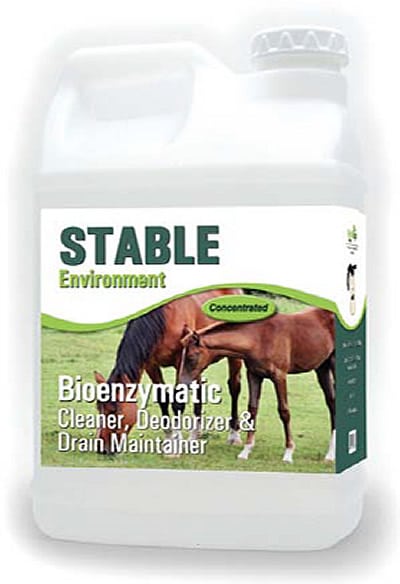
3. Clean
Although EHV is primarily spread through close contact and respiratory droplets, it can also spread via surfaces contaminated with nasal discharge and other bodily fluids. These fluids can form a biofilm on surfaces. Because disinfectants do not have the inherent chemical ability to break down organic matter (biofilm), pre-clean withProVetLogic STABLE Environment Enzymatic Cleaner before implementing the disinfecting process with ProVetLogic Animal Facility Disinfectant.
Before Getting Started
-
Remove animals from the task area.
-
Remove food and water dishes, bedding, and rubber mats from the area before implementing the cleaning process.
-
Wash and/or sanitize hands.
-
Put on protective gloves, and other PPE if needed.
Cleaning Procedure
-
For best results, preclean all surfaces using a solution of 4-ounce STABLE Environment Enzymatic Cleaner per gallon of water.
-
In a pump sprayer or foam gun applicator, mix a solution of 1-ounce ProVetLogic Animal Facility Disinfectant per gallon of water.
-
Starting from the furthest location from the stall entrance and working backwards, liberally apply the solution to the stall walls, walkway and all surrounding touch points.
-
Allow solution to stand for a minimum of 10 minutes.
-
Agitate surface if needed, using a synthetic brush.
-
Rinse and/or squeegee soiled solution down the drain, or toward the exterior exit.
-
Sweep or squeegee to remove any puddles.
-
Allow the surface to dry thoroughly.
-
Install fresh bedding and return animal to the area.
Additional Steps
-
Thoroughly clean rubber mats using a 4-ounce per gallon solution of STABLE Environment and water to remove embedded organic matter.
-
Clean and disinfect Feed Buckets, Water Troughs, Boots & Shoes, tools and transport vehicles.
Contact our team and we’ll help you select the right products and processes for your specific needs. Call us at 502-382-8320 or email roland@bluegrass-ky.com.